

Last Updated: October 28, 2026
Quick Summary
Start a spiritual practice by anchoring a five-minute daily habit of slow breathing and one written sentence, then add reflection, a second practice, and a review over four weeks. Ten to fifteen minutes daily outperforms an hour once a week because repetition builds the reflective muscle.
- Spend your first two weeks noticing what you already believe before choosing practices.
- Try prayer, contemplation, and meditation for ten minutes on three separate days.
- Never miss twice in a row, and restart the next day without ceremony.
- Shrink a session to two minutes when you have no time rather than skipping it.
- Give any new practice four to six weeks before you judge it.
Table of Contents
- What Starting a Spiritual Practice Actually Means
- Spiritual Practices for Beginners: Start With Self-Awareness
- Building a Daily Spiritual Practice That Fits Your Life
- Spiritual Routine Examples for Morning, Evening, and Busy Days
- Spiritual Tools for Beginners: What You Actually Need
- How to Choose Practices Based on Your Beliefs and Goals
- How to Tell If Your Practice Is Actually Helping
- Common Beginner Obstacles and How to Troubleshoot Them
- Cultural Sensitivity, Safety, and When to Seek Support
- Choosing Your First Spiritual Tools at The Crystal Flame
- Frequently Asked Questions
What Starting a Spiritual Practice Actually Means
Starting a spiritual practice means committing to a repeatable set of activities, done alone or in community, that help you pay attention to what matters beyond the immediate demands of the day. It is not a personality type or a religion you must qualify for. This guide walks through how to start a spiritual practice from a standing start, with no prior experience and no expensive equipment. The most useful first move is to treat it like any other habit: small, scheduled, and adjustable.
Spiritual Practices for Beginners: Start With Self-Awareness
Self-awareness is the foundation of every spiritual practice, because you cannot choose practices that fit you until you know what you already believe. Many beginners skip this step and copy someone else's routine, then quit within a month. A better approach is to spend your first two weeks simply noticing.
Reflect on Your Beliefs and Values
Write down what you actually think about purpose, connection, and what you owe other people. A common mistake is writing what you think you should believe rather than what you do. A small notebook works fine for this.
Try Prayer, Contemplation, or Meditation
These three are the core practices most traditions share. Prayer is speaking or directing intention outward. Contemplation is sitting with a question without rushing to answer it. Meditation is training attention, often through breathing or mindfulness. Try each for ten minutes on three separate days and note which one left you calmer rather than restless.
Building a Daily Spiritual Practice That Fits Your Life
Most guides tell you to "be consistent" and stop there. What beginners actually need is a sequenced plan they can follow for the first month, one that starts small enough to survive a bad week and adds depth only after the habit holds. Here is a four-week starter plan you can adapt to your own beliefs and schedule.
Week 1: Anchor the Habit (5 Minutes a Day)
Pick one time and one place. Sit for five minutes and do only one thing: three minutes of slow breathing, then two minutes writing a single sentence about how you feel. Do not add anything else. The goal this week is not insight; it is showing up. If you miss a day, restart the next day without ceremony.
Week 2: Add One Reflective Element (10 Minutes a Day)
Keep the breathing, then add a short reflection prompt: What did I notice today? What did I avoid? What am I grateful for? Write three to five sentences. This is where most people first feel the practice "working," because reflection turns scattered attention into a pattern you can see.
Week 3: Introduce a Second Practice (10-15 Minutes)
Choose one practice from a different category than your anchor: if you have been sitting, try five minutes of mindful walking or gentle movement; if you have been writing, try five minutes of silent contemplation or prayer. Alternating practices prevents boredom and shows you which mode fits you better.
Week 4: Review and Adjust (15 Minutes, Three Days)
On three days this week, extend the session to fifteen minutes and end with a short review: What helped? What felt like obligation? What do I want to keep? Drop anything that failed the "steadier, not agitated" test from the section above. What remains becomes your baseline routine.
The Recovery Rule
Expect to miss days. The rule that matters is simple: never miss twice in a row. A missed day is data, not failure. A missed week usually means the session was too long or too ambitious, so shrink it until it is unbreakable.
This plan is deliberately modest. Ten to fifteen minutes daily outperforms an hour once a week because repetition, not duration, is what builds the reflective muscle. Once the habit holds for a month, you can lengthen sessions or add practices without risking the whole routine.
Spiritual Routine Examples for Morning, Evening, and Busy Days
Morning routines suit people who wake before the household stirs. Try five minutes of breathing, then three lines in a journal about what you want to bring to the day. Evening routines suit reflection: review what happened, note one thing you are grateful for, and let the day close. Busy days need a floor, not a full session. A single minute of stillness before you open your laptop counts. Self-cleansing crystal pens are a low-effort tool readers can use for quick practice on busy days.
Spiritual Tools for Beginners: What You Actually Need
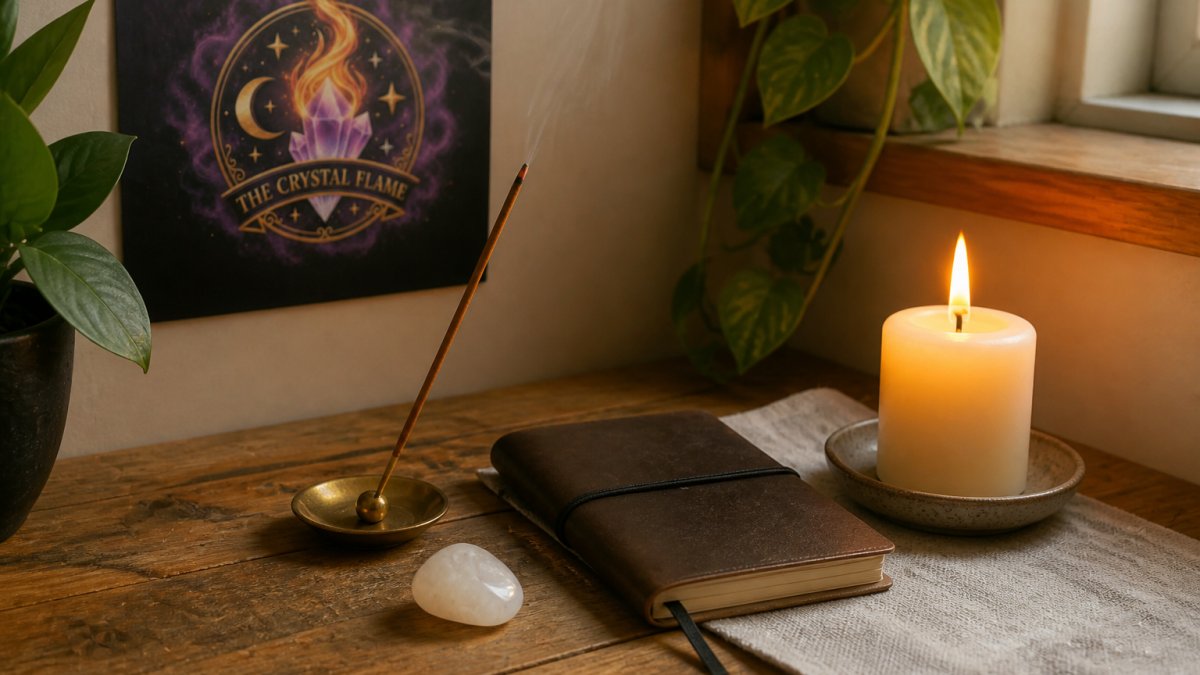
You need almost nothing to begin. A quiet spot, a few minutes, and something to write with covers the essentials.
| Tool | What it does in practice | Who it suits |
|---|---|---|
| Journal | Captures reflections and patterns over time | Anyone starting out |
| Candle | Marks the beginning and end of a session | People who need a ritual cue |
| Incense | Signals a shift in atmosphere | Those with a dedicated space |
| Tumbled stone | Gives restless hands something to hold | Beginners who struggle to sit still |
| Divination deck | Poses questions for reflection | People who think best through prompts |
How to Choose Practices Based on Your Beliefs and Goals
Match the practice to the outcome you want, not to what looks impressive online. If your goal is stress reduction, breathing and movement practices fit best. If your goal is meaning and direction, contemplation, reading, or prayer fit better. If your goal is gratitude and compassion, a short daily reflection works well.
Ask three questions before committing:
- Does this practice conflict with my existing beliefs or obligations?
- Can I do it in the time and space I actually have?
- Does it leave me steadier, or does it leave me agitated?
A practice that fails question three is the wrong practice for you, regardless of how well it works for someone else.
How to Tell If Your Practice Is Actually Helping
Judge a practice by its effect on ordinary life, not by how it feels during the session. The signals that matter show up hours later: you recover from frustration faster, you sleep better, you notice when you are distracted, and you are less reactive with the people around you. Many practitioners find that a simple weekly note is enough to spot the pattern.
Watch out: the most common self-deception is mistaking intensity for progress. A practice that produces dramatic feelings but no change in how you treat people is entertainment, not growth. Give any new practice four to six weeks before you judge it, then keep what works and drop what does not.
Common Beginner Obstacles and How to Troubleshoot Them
Most beginners quit for predictable reasons, and each has a practical fix.
- No time. Shrink the session to two minutes. A shorter practice you keep beats a longer one you abandon.
- Racing thoughts. Stop trying to empty your mind. Count breaths instead, and return attention each time it wanders.
- Boredom. Rotate two practices rather than forcing one you dread.
- Skepticism. Keep the parts that work and drop the metaphysics. Secular versions of meditation and reflection are widely documented.
- Missing days. Restart the next day without ceremony. Guilt is the biggest cause of permanent quitting.
The pattern behind all five is the same: beginners aim too high, miss, and read the miss as failure. Lower the bar until the habit is unbreakable.
Cultural Sensitivity, Safety, and When to Seek Support
Many practices come from living traditions, and how you approach them matters. Respect does not mean avoiding other traditions; it means learning their context before you adopt their forms, and being honest about what you are doing and why.
Learning Context Before Adopting a Practice
Before you take up a practice from a tradition that is not yours, spend a little time on three questions: Where does this practice come from? Is it meant to be practiced by outsiders, or is it reserved for members of a community? What does it mean within that tradition, beyond how it is marketed? A meditation technique, a breath practice, or a ceremonial object can carry meanings that are lost when it is sold as a wellness accessory. When in doubt, ask someone who practices it rather than relying on a retailer's description.
Avoiding Appropriation Without Avoiding Curiosity
Appropriation is not the same as learning. Reading about a tradition, attending a public class, or trying a widely taught secular form of meditation is not the problem. The problem is taking sacred or restricted elements out of context, presenting them as your own, or profiting from them without understanding them. Practical guardrails:
- Avoid buying ceremonial items that carry specific cultural restrictions; a decorative object is not the same as a ritual tool.
- Be wary of anyone selling certainty, secret knowledge, or guaranteed spiritual outcomes.
- If a teacher cannot explain where a practice comes from and who it is for, treat that as a warning sign.
Choosing a Trustworthy Teacher or Community
A good teacher is transparent about their training, clear about what they do and do not claim, and comfortable with questions. Red flags include pressure to commit quickly, discouragement of outside contact, claims of unique access to truth, and fees that escalate as you advance. You are allowed to leave any group at any time.
Safety, Boundaries, and When to Seek Support
Spiritual practice supports wellbeing; it does not replace medical or mental health care. If you are experiencing persistent low mood, anxiety, or distress, speak with a licensed professional. Practices that involve fasting, breath retention, or long retreats deserve particular caution and a conversation with a doctor first. For meditation and mindfulness specifically, the National Center for Complementary and Integrative Health publishes plain-language guidance on what the research does and does not support, and the American Psychological Association maintains accessible background on mindfulness and its clinical uses.
Choosing Your First Spiritual Tools at The Crystal Flame
The Crystal Flame offers a curated collection of over 700 mystical products, chosen with intention to support curious beginners and seasoned practitioners.
Best for: readers who want a small, deliberate set of tools rather than a haul. A crystal flame point tower is a concrete first tool readers can browse and buy when choosing their starter items. Skip if: you are still in the self-awareness stage. Finish that first, then buy.
Frequently Asked Questions
How do you practice spirituality as a beginner?
Start with one small, repeatable action rather than a full regimen. Pick a quiet moment, sit for five minutes, and try either silent breathing, a short prayer, or writing one sentence in a journal. Do that same thing for two weeks before adding anything else. One practice, done consistently, teaches you more than five done sporadically.
How long should a daily spiritual practice take?
Five to ten minutes is enough to build the habit, and most beginners do better starting there than aiming for an hour. A workable daily spiritual practice might be three minutes of breathing in the morning and two minutes of gratitude journaling at night. Once the routine feels automatic, extend it. Length matters far less than frequency, and a short practice you actually keep beats a long one you skip.
Do I need spiritual tools for beginners to get started?
No. Breathing, prayer, silence, and reflection require nothing you do not already own. Tools help when they anchor a habit: a journal gives reflection somewhere to land, a candle marks the start of quiet time, and a tumbled stone gives your hands something to hold during meditation. Treat them as supports for the practice, not prerequisites. The Mystic Pocket Journal at $9.95 is a low-cost way to begin.
How can I make my spiritual practice consistent?
Attach it to something you already do every day. Pair a minute of stillness with your morning coffee, or a short reflection with brushing your teeth at night. Keep your tools visible rather than stored in a drawer. Missed days are normal, so decide in advance that a skipped session means resuming the next day, not restarting the count. Consistency comes from a low bar and a fixed trigger, not willpower.
How can I find a spiritual practice that feels right for me?
Match the practice to what you already believe and how you naturally recharge. If you think in words, journaling or prayer fits. If stillness is hard, walking meditation or gentle movement works better. If you are drawn to ritual, candles and intention setting give the practice shape. Try one approach for two to three weeks, note how you feel afterward, and keep what genuinely settles you rather than what looks impressive.
What should I include in a spiritual routine?
A balanced routine usually has three parts: something that quiets the mind, something that directs your attention, and something that records it. Quieting could be breathing or silence. Directing could be prayer, reading a passage of philosophy or poetry, or setting an intention. Recording could be a single journal line. Two or three of these, five minutes total, form a complete spiritual routine example you can build on.
The hardest part of a spiritual practice is not learning technique. It is keeping a small commitment when life gets loud. That is the problem we built The Crystal Flame to help with: a curated catalog of 700+ mystical products, tools chosen with intention for every level of practice, and a free US shipping option so your first setup arrives without friction. Get started with The Crystal Flame and build a practice you will still be keeping a year from now.
